Dracul

SUMMARY: A brief synopsis of Vlad Dracula, the true historical figure and what he has become in modern culture.
Although Count Dracula is a fictional character he has appeared in over 700 movies. Why? By comparison, John Wayne was in about 170 movies.
The character of Count Dracula was created by Irish author Bram Stoker, who published the gothic novel Dracula in 1897. Stoker's character was inspired by Romanian folklore, superstitions, and the historical figure Vlad the Impaler, whose name was Vlad III, also known as Vlad Dracula.
The name "Dracula" originates from Vlad the Impaler's father, Vlad II, who joined the Order of the Dragon. "Dracul" means "dragon" in Romanian (from the Latin draco), and Vlad II was given this name. His son was then called "Drăculea," or "son of Dracul," which became Dracula. The modern association with "devil" comes from the fact that in modern Romanian, drac means "the devil," a meaning that has influenced the public's perception of the name.
Introduction to Vlad Țepeș and the Dracula Legends
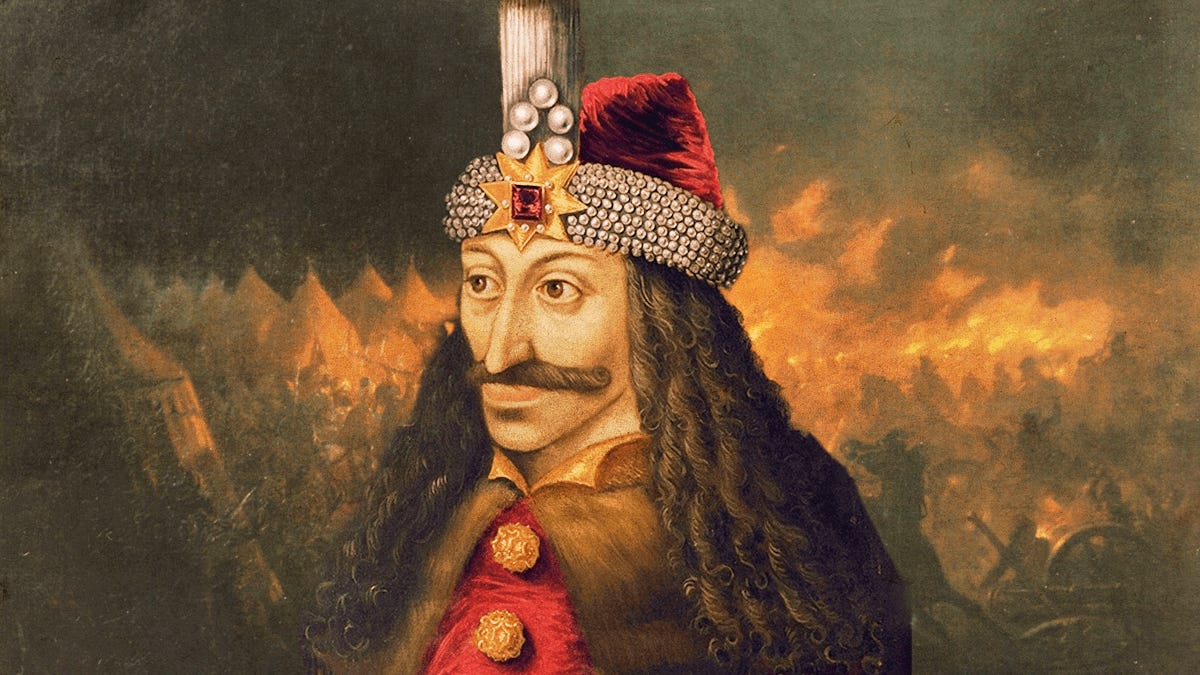
Vlad III, known historically as Vlad Țepeș (Romanian for “Vlad the Impaler”) or Vlad Dracula, was a 15th-century ruler of Wallachia, a principality in what is now Romania. His brutal tactics and unyielding resistance against the Muslim Turkish Ottoman Empire cemented his place in history as both a national hero and a symbol of terror.
His epithet “Țepeș” derives from his preferred method of execution—impalement—while “Dracula” stems from his father’s nickname “Dracul,” meaning “the Dragon” (from the Order of the Dragon, a Christian chivalric order) and later evolving into connotations of “the Devil” in Romanian folklore.
Centuries after his death, Vlad’s name and reputation profoundly influenced Bram Stoker’s 1897 Gothic novel Dracula, transforming him into the archetype of the bloodthirsty vampire count, though the literary figure is more a composite of folklore than a direct biography. This discussion explores Vlad’s historical background, his reigns marked by savagery and defiance, his posthumous cultural portrayals, and the mythic evolution into the Dracula legend.
The Impalement Procedure
Vlad the Impaler. So what exactly is impalement and how is it done? Not for the squeamish, it is worse than just about anything in the movies.
The actual procedure used for impalement by Vlad III, also known as Vlad the Impaler or Vlad Țepeș, involved a slow and excruciating process designed to prolong the victim's suffering and serve as a psychological deterrent.
The Stake: Victims were typically impaled on a long, thick wooden or metal pole (stake) that was often blunted or rounded at the end, rather than sharply pointed. A very sharp point would kill the victim too quickly, defeating the purpose of prolonged torture.
Insertion: The victim was typically restrained and the tip of the stake was inserted into a bodily orifice, most commonly the anus for men or the vagina for women. The entry point and stake were often greased with animal fat to make the initial insertion easier.
Internal Trajectory: Executioners with expertise in the method would carefully angle the stake to avoid vital organs, such as the heart, which would cause immediate death. The goal was to thread the stake through the body cavity (e.g., through the intestines and chest) until it exited near the shoulder, neck, or mouth.
Vertical Positioning: Once the stake was inserted, the pole was lifted and embedded vertically in the ground. Gravity and the victim's own body weight would cause them to slowly slide down the stake, driving it further into their body over time. A rest or stay was sometimes added to the pole to prevent the body from sinking down too quickly.
Slow Death: Death was not immediate. Victims could survive for hours, and sometimes days, in extreme agony, ultimately dying from compression of the lungs, organ damage, perforated bowels, or exposure.
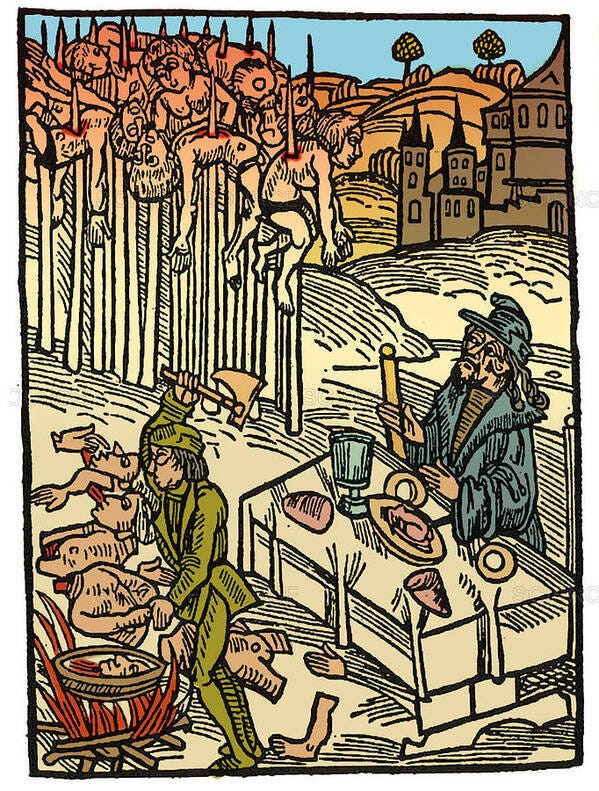
Public Display: The impaled bodies were left on display in public places, sometimes arranged in a "forest" of thousands of stakes, as a brutal and public warning to enemies and criminals alike. Vlad was even known to dine among the impaled bodies of his victims.
This systematic and horrific method was a form of psychological warfare that became Vlad the Impaler's signature form of punishment and control. Invaders thought twice before crossing his borders. Even the Ottomans were taken aback by the brutal display of horror.
Historical Background: Early Life and Family
Vlad was born between 1428 and 1431 in Sighișoara, Transylvania (then part of the Kingdom of Hungary), during a turbulent era when the Balkans were a battleground between Christian powers like Hungary and the expanding Muslim Ottoman Empire.
He was the second son of Vlad II Dracul, a nobleman from the House of Drăculești (a branch of the Basarab dynasty that had ruled Wallachia since the 14th century). He ascended as Voivode (prince) of Wallachia in 1436. Vlad II’s membership in the Order of the Dragon—a fraternity founded by Holy Roman Emperor Sigismund in 1408 to defend Christendom against Islam—earned him the “Dracul” moniker, symbolizing both a dragon emblem and a pledge of militant piety.
Vlad’s mother was likely Cneajna, a Moldavian noblewoman related to the ruling Mușatin dynasty, though some sources suggest she was a kinswoman of Alexander I of Moldavia. Vlad’s siblings included an elder brother, Mircea II (who briefly ruled Wallachia before his murder), and a younger brother, Radu (later called “the Handsome”), who would become both ally and rival.
The family navigated a precarious web of alliances: Wallachia paid tribute to the Ottomans for protection while seeking Hungarian support against them, a balancing act that often led to betrayal and violence. In 1442, at around age 11, Vlad and Radu were sent as hostages to the Ottoman court of Sultan Murad II in Nicopolis (modern Bulgaria) to guarantee their father’s loyalty amid Ottoman demands for military aid against Hungary.
Held in relative comfort but under constant threat—especially after Vlad II joined the failed Crusade of Varna in 1444—the boys received an Ottoman education in language, warfare, and administration, which later informed Vlad’s tactical acumen and deep-seated hatred for his captors.
Tragedy struck in November 1447: John Hunyadi, the Hungarian regent, invaded Wallachia, orchestrating the assassination of Vlad II (strangled and buried alive) and Mircea II (blinded and buried alive by boyars). Hunyadi installed Vladislav II, a distant relative and Danesti dynasty claimant, as voivode.
The orphaned Vlad and Radu fled to the Ottoman Empire, where Vlad honed his survival instincts in exile, fostering a lifelong vendetta against disloyal boyars (Wallachian nobles) and the Ottomans.
Vlad II Dracul Father Voivode of Wallachia (1436–1447); murdered by boyars with Hungarian complicity in 1447.britannica.com
Cneajna Mother Moldavian noble; details sparse; likely died before 1450.
Mircea II Elder Brother Brief voivode (1442); murdered in 1447.
Radu the Handsome Younger Brother Ottoman ally; deposed Vlad in 1462; died 1475.
Mihnea cel Rău Son Born ~1462; ruled Wallachia 1508–1509; known for cruelty.
Unknown First Wife Spouse Transylvanian noble; mother of Mihnea; fate unknown.
Justina Szilágyi Second Wife Hungarian noble, cousin of King Matthias Corvinus; married ~1475; remarried after Vlad’s death.
Rise to Power and Reign
Wallachian politics was a brutal game of thrones, with frequent assassinations and foreign interventions determining succession. Vlad’s first reign began in October 1448, when he invaded with Ottoman backing while Vladislav II campaigned against the Turks; it lasted mere months before Vladislav ousted him following the Ottoman victory at the Second Battle of Kosovo. Exiled again, Vlad wandered between Moldavia (where his uncle Bogdan II ruled) and Hungary, rejecting Hunyadi’s overtures due to lingering resentment over his father’s death.
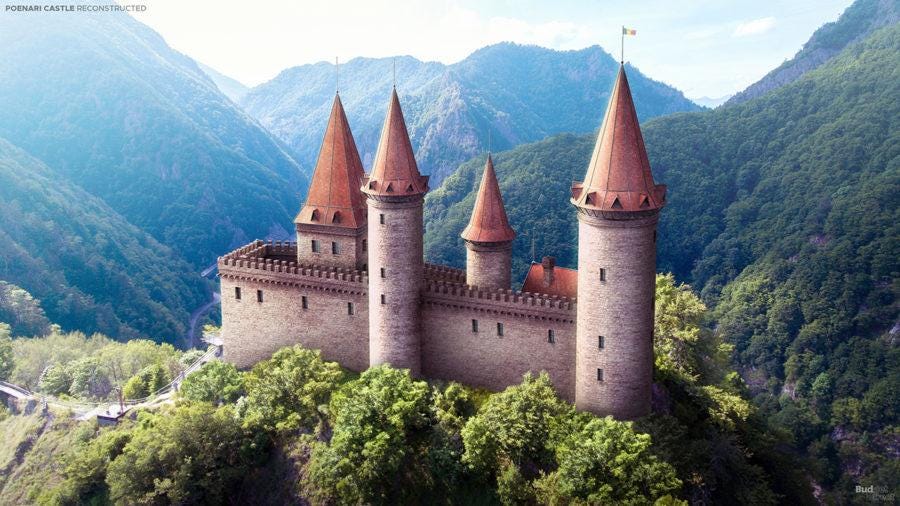
His pivotal second reign (August 1456–July 1462) followed the Ottoman victory at the Siege of Belgrade, which killed Vladislav II. With Hungarian support from Hunyadi’s successor, Vlad ambushed and slew Vladislav near Târgoviște, consolidating power through a ruthless purge: he invited suspect boyars to a St. George’s Day feast in 1457, then impaled hundreds and forced survivors to build Poenari Castle under grueling conditions. This “revolution” redistributed estates to loyalists, centralizing authority and funding defenses. Vlad briefly paid tribute to Sultan Mehmed II but soon defied him, executing Ottoman envoys by nailing their turbans to their heads in 1461.
Imprisoned in Hungary from 1462 to 1475 after fleeing Mehmed’s invasion (blamed by Matthias Corvinus for fabricated atrocities), Vlad was released during anti-Ottoman fervor. His third reign (November 1476–January 1477) saw him ally with Moldavian Prince Stephen III and Hungarian forces, ousting the Ottoman puppet Basarab Laiotă. It ended abruptly with his death, amid Wallachia’s descent into Ottoman vassalage.
Military Campaigns and Reign of Terror
Vlad’s military prowess lay in asymmetric warfare: guerrilla raids, scorched-earth retreats, and psychological terror. In 1459–1461, he halted tribute payments, launching preemptive strikes across the Danube, burning Bulgarian villages and impaling over 23,000 Ottoman muslims to sow panic and send a message.
His 1462 “Night Attack” at Târgoviște—a daring assault on Mehmed’s 150,000-strong army—failed to kill the sultan but killed thousands of viziers and janissaries. Retreating, Vlad left a “forest of the impaled”: 20,000 stakes bearing Turks, Bulgarians, men, women, and children, their bodies bloated in the summer heat, which reportedly sickened Mehmed into withdrawal. Chronicler Laonikos Chalkokondyles noted the sultan’s horror at Vlad’s “diabolical” ingenuity.
Impalement—driving a stake through the body without piercing vital organs for prolonged agony—was not unique to Vlad but scaled to genocidal levels, targeting boyars (members of the highest rank of the aristocracy in medieval Eastern European states), Saxon merchants (for aiding rivals), and even thieves to enforce draconian order.
German pamphlets from the 1460s, printed in Nuremberg and Vienna, sensationalized tales: Vlad boiling families alive, roasting children, or dining amid writhing corpses while flies swarmed the maggot-ridden dead.
Slavic skazaniya (tales) from the 1480s portrayed him as “evil-wise,” praising his anti-corruption rigor despite the sadism. Modern historians view these as war crimes, potentially including genocide, though some Romanian scholars contextualize them as desperate measures against existential threats.
In 1476, during Bosnia campaigns, Vlad impaled Turkish captives en masse, earning Ottoman retaliation. His forces, often outnumbered, delayed Ottoman consolidation in the region, allying with figures like Stephen III at the Battle of Valea Albă.
Death and Posthumous Reputation
Vlad met his end in December 1476 or January 1477, aged 45–49, near Snagov or Bucharest. Leading ~2,000 men against Basarab Laiotă’s Ottoman-backed force of 4,000, he was killed—possibly beheaded by a disguised assassin or mistaken for a Turk by his own troops during a rout. His head was sent to Mehmed as a trophy, displayed in Constantinople.
His body, mutilated, may rest at Snagov Monastery (unconfirmed by 1933 excavations) or Comana Monastery.
His reputation fractured along cultural lines: In Romania, Vlad endures as a patriot, his cruelty romanticized in 19th-century poetry (e.g., Mihai Eminescu’s calls for his spirit to “impale” modern foes) and folklore as a just avenger.
A 1999 poll ranked him among Romania’s top historical figures. Conversely, German-Slavic tales vilified him as a Nero-like monster, influencing Renaissance art and propaganda against Eastern “barbarians.”
Ottoman chroniclers dubbed him “Kazıklı Voyvoda” (Impaler Lord), while Russian narratives admired his iron-fisted rule.
Needless to say, he recieved mixed reviews in the media then and now. To some a hero and a patriot for withstanding the Muslim invasion of Europe. To his enemies a brutal sadist, but they feared him all the same.
The Dracula Legends: From History to Vampire Myth
Bram Stoker’s Dracula fused Vlad’s name with Eastern European vampire lore, but the connection is indirect and overstated in popular culture. In 1890, Stoker encountered “Dracula” in William Wilkinson’s 1820, “An Account of the Principalities of Wallachia and Moldavia”, which cited German tales of Vlad as a “wicked” prince without detailing atrocities.
Emily Gerard’s 1885 essay on Transylvanian superstitions—describing strigoi (vampire-like undead)—provided the supernatural framework, while Stoker’s notes show “Count Wampyr” evolving into “Dracula,” a Szekler noble (Hungarian ethnicity, not Wallachian). Stoker knew scant of Vlad’s life; the novel’s count is a timeless undead predator, not the impaler, with no references to stakes or Ottoman wars.
Post-publication, the link solidified: 1970s scholars like Radu Florescu and Raymond McNally’s, “In Search of Dracula”, popularized Vlad as the “real Dracula,” tying impalement to vampiric piercing and bloodlust to folklore. This romanticized narrative ignores discrepancies—e.g., Vlad’s Orthodox faith versus the novel’s pagan-tinged count—and fueled tourism (Poenari Castle as “Dracula’s Castle”) and media (Bela Lugosi’s 1931 film, Francis Ford Coppola’s 1992 adaptation).
Yet, as historian Elizabeth Miller notes, Stoker intended a generic “Drăculești” descendant, blending Vlad’s menace with Slavic revenants and Victorian fears of “Eastern” decay. Today, the legend overshadows the man: Vlad’s historical defiance endures in Romanian identity, while Dracula’s gothic allure perpetuates a myth of eternal, seductive evil.
Few historical characters have inspired so many books and movies.
The Enduring Allure of Vlad Țepeș and the Dracula Myth: Why It Inspires Endless Adaptations
Few historical figures have permeated popular culture as profoundly as Vlad III Țepeș (Vlad the Impaler), whose legacy as a 15th-century Wallachian warlord against the Ottomans fused with Bram Stoker’s 1897 novel Dracula to birth one of the most adaptable archetypes in literature and film.
While Vlad himself was a real prince known for his brutal impalements and unyielding defiance, the fictional Count Dracula—loosely inspired by him—has eclipsed the man, spawning over 700 cinematic appearances alone, alongside countless books, plays, comics, and TV series.
This isn’t mere coincidence; the Dracula saga thrives because it masterfully blends historical grit with timeless Gothic horror, allowing creators to reinvent it across eras, genres, and ideologies. Below, explore the key reasons for its prolific output, drawing on its psychological depth, cultural versatility, and narrative innovations.
1. A Potent Symbol of “The Other”: Fear, Desire, and the Exotic Threat
At its core, Dracula embodies humanity’s primal dread of the outsider—rooted in Vlad’s real-life role as a Christian bulwark against Ottoman “infidels,” which Victorian audiences recast as Eastern European menace invading civilized Britain. Stoker’s novel taps into late-19th-century anxieties: reverse colonization (the vampire “infecting” London), sexual taboos (Dracula’s hypnotic seduction of women), and degeneration (bloodlust as moral decay). This “otherness” evolves with time—early films like F.W. Murnau’s Nosferatu (1922) portray him as a plague-bringer amid post-WWI xenophobia, while modern takes, like Guillermo del Toro’s unproduced “The Strain” series, update him as a bioterrorist.
The character’s seductive ambiguity is key: once a grotesque rat-like figure in Nosferatu, Dracula morphed into Bela Lugosi’s suave aristocrat in Tod Browning’s 1931 “Dracula”, blending terror with erotic allure. This duality—monster or lover?—fuels romantic reinterpretations, from Hammer Horror’s Christopher Lee as a brooding Byronic hero in the 1950s–70s films to Netflix’s 2020 Dracula miniseries, where Claes Bang’s count grapples with immortality’s loneliness. As one analysis notes, Dracula’s adaptability as “romantic lead, family man, tragic anti-hero, bumbling fool, or terrifying creature” ensures endless reinvention.
2. Narrative Innovation and Suspenseful Storytelling
Stoker’s Dracula isn’t just a horror tale; its epistolary structure—diaries, letters, newspaper clippings—creates immersive, multi-perspective suspense that feels modern even today, predating found-footage films by a century. This format allows for unreliable narrators and fragmented reveals, heightening dread without gore, which has inspired structural experiments in adaptations like the 1977 BBC “Count Dracula” (faithful to the book’s clippings) or graphic novels such as Alan Moore’s “The League of Extraordinary Gentlemen” (1999), where Dracula lurks in a steampunk world.
The novel’s “sharp, haunting, creative, and exciting” essence—praised for its psychological depth over cheap shocks—invites homage and parody alike. Stephen King’s “Salem’s Lot” (1975) echoes it as a small-town invasion story, while Anne Rice’s “Interview with the Vampire” (1976 starring Tom Cruise) flips the script with sympathetic undead protagonists, spawning its own multimedia empire. Parodies like Mel Brooks’ “Dracula: Dead and Loving It” (1995) thrive on the familiarity, proving the myth’s cultural saturation.
3. Historical Hook Meets Universal Folklore: Vlad’s Brutal Legacy as Fodder
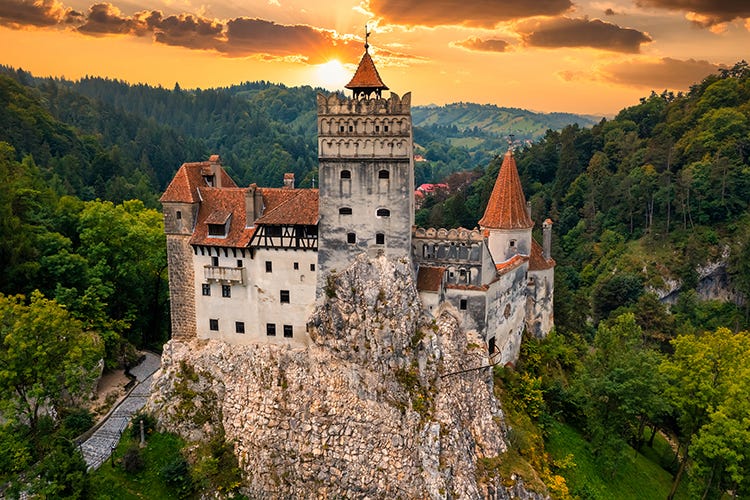
Vlad Țepeș provides a gritty anchor: his real atrocities (impaling 20,000+ Ottomans in 1462) lend authenticity to Dracula’s savagery, blurring history and myth in a way few figures match—think Jack the Ripper or Cleopatra, but with supernatural flair. Books like Radu Florescu and Raymond McNally’s “In Search of Dracula” (1972) popularized this link, turning Vlad’s castles (e.g., Bran, though inaccurately) into tourist magnets and plot devices. This fusion allows creators to explore “what if” scenarios: Francis Ford Coppola’s “Bram Stoker’s Dracula” (1992) invents a tragic backstory tying the count directly to Vlad, emphasizing lost love over mere bloodlust, making it one of the most faithful yet embellished films.
Romanian nationalism romanticizes Vlad as a hero, inspiring local works like the 1979 film “Vlad Țepeș”, while global media amplifies the vampire angle, with over 200 Dracula films by 2023 alone. The myth’s media feedback loop—early German pamphlets exaggerating Vlad’s cruelty influenced Stoker, who in turn shaped vampire lore—creates a self-perpetuating cycle.
Notable Adaptations: A Snapshot of Proliferation
To illustrate the scale, here’s a table of landmark books and movies, showing genre-spanning evolution:
Year Title Medium Key Innovation/Appeal Director/Author
1897 Dracula Novel Epistolary horror; defines vampire tropes Bram Stoker
1922 Nosferatu Film Unauthorized adaptation; plague metaphor F.W. Murnau
1931 Dracula Film Iconic Lugosi performance; Hollywood glamour Tod Browning
1958 Dracula (Hammer) Film Colorful Gothic sensuality; Lee’s commanding presence Terence Fisher
1975 Salem’s Lot Novel Rural American invasion; psychological terror Stephen King
1992 Bram Stoker’s Dracula Film Romantic epic; Vlad backstory integration Francis Ford Coppola
2004 Van Helsing Film Action blockbuster; steampunk mash-up Stephen Sommers
2014 Dracula Untold Film Origin story as anti-hero; ties to Vlad’s wars Gary Shore
2020 Dracula (BBC/Netflix) Miniseries Modern twists; queer subtext amplified Mark Gatiss & Steven Moffat
2024 Nosferatu (upcoming remake) Film Visceral horror; focuses on dread’s purity Robert Eggers
This list scratches the surface—add comics (30 Days of Night), games (Castlevania), and musicals (Dracula: A Musical). As of 2025, with Eggers’ Nosferatu remake on the horizon, the cycle continues.
Why It Persists: A Mirror to Society’s Shadows
Ultimately, Dracula’s proliferation stems from its elasticity: Vlad’s historical ferocity grounds the fantasy, but the vampire’s immortality lets it reflect each era’s monsters—immigrants in the 1920s, sexual liberation in the 1960s, pandemics today. In a world craving cathartic darkness, few myths offer such rich, subversive potential. As one critic observes, despite countless retellings, the original’s “revelations” still surprise, ensuring Dracula’s bloodline endures. If Vlad rose from his (disputed) grave at Snagov, he’d likely approve: terror, like history, is best when it impales the imagination.
Dracula is a timeless tale that captures the imagination like no other. There are so many endless variations that it's difficult to know much of the truth. I tried to point out what is considered as historical facts, in some cases told in contemporary media.
Some of the old Hammer films are interesting from a historical reflection of the culture at the time. In the movie, “Queen of the Damned”, the vampire Lestat becomes a rockstar. Why not?
Bran Castle
Poenari Castle